



6 Supercar Safety Features To Know In 2026: Technology That Could Save Your Car
Supercars are renowned for their exceptional performance and striking design. Image generated by Gemini
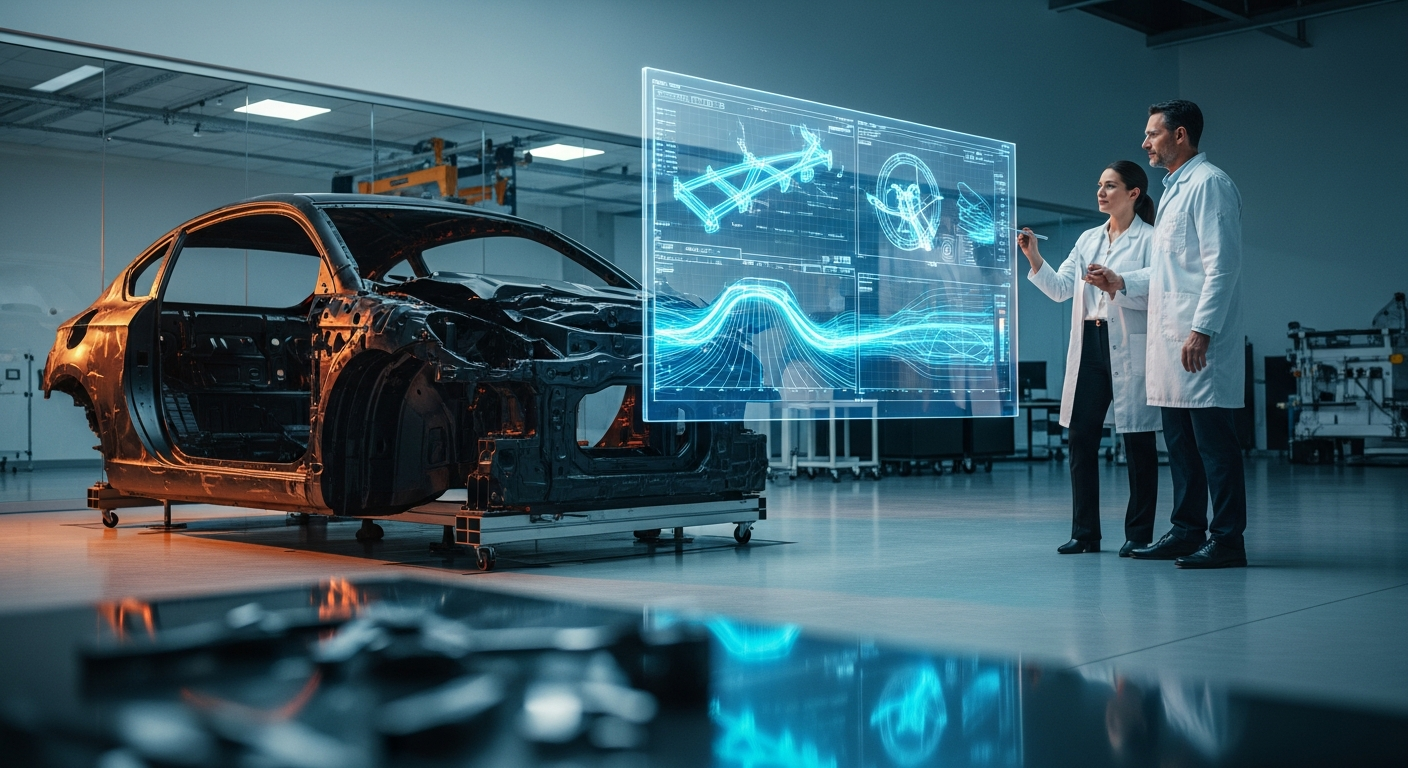
The modern supercar presents a paradox: machines built for breathtaking speed and lap times often rank among the safest passenger vehicles on the road.
These automotive apex predators are not fragile, but marvels of safety engineering inspired heavily by the high-stakes world of Formula 1 racing.
Beneath sculpted bodywork and beyond headline-grabbing horsepower, advanced technologies form a protective shield that manages immense forces and safeguards occupants.
This guide breaks down six critical safety systems, from carbon fibre cores to intelligent electronics, working together to protect drivers in extreme situations.
The Unyielding Core: Carbon Fiber Monocoque Chassis
The first and most fundamental line of defense in any modern supercar is its core structure. This isn’t just a frame; it’s a meticulously engineered survival cell designed to remain intact during catastrophic impacts. The foundation of this protection is the carbon fiber monocoque, a technology born from top-tier motorsport and now a hallmark of high-performance automotive design. Its primary function is to create an incredibly strong and rigid passenger compartment that resists deformation and intrusion, safeguarding the occupants within.
What Defines a Monocoque?
The term monocoque comes from Greek words meaning single and shell, describing a structure where the body and chassis form one unit.
Unlike body-on-frame designs or older unibody construction, a carbon fibre monocoque forms a single, seamless structural tub.
This construction delivers an exceptional rigidity-to-weight ratio, improving both strength and efficiency.
Its immense stiffness ensures precise handling and allows suspension and safety systems to function correctly without chassis flex under load.
How It Protects in a Collision
In a collision, the carbon fiber monocoque’s primary job is to maintain its shape. Its incredible strength prevents the cabin from collapsing, giving restraint systems like airbags and seatbelts the secure space they need to work effectively. Aluminium subframes surround the survival cell and act as engineered crumple zones. They deform in a controlled way, absorbing and dispersing crash energy away from the passenger compartment. This combination of a rigid cell and sacrificial crumple zones is the bedrock of modern passive safety design.
Taming the Air: The Dual Role of Active Aerodynamics
Moving from passive to active safety, aerodynamics in modern supercars serve a purpose far beyond simply generating downforce for cornering grip. Inspired by the new 2026 F1 regulations, which place a heavy emphasis on movable aerodynamic components, modern supercars use active systems to manipulate airflow in real-time for both performance and safety. As teams in motorsport conduct exhaustive wind tunnel testing to achieve parity and safety, production supercars benefit from this relentless development, turning airflow into a powerful safety tool.
More Than a Static Wing
Active aerodynamic systems employ a network of computer-controlled movable flaps, spoilers, and vents. These elements constantly adjust their angle of attack and position based on the car’s speed, steering input, and braking force. For example, during acceleration, a rear wing may flatten to reduce drag, then increase its angle before a corner to generate maximum downforce and stability.
Recent testing shows that even small ride-height changes can significantly affect downforce, making active management essential for consistent behaviour.
The Safety Application
The most dramatic safety function of active aerodynamics is its role in braking. Under heavy deceleration, a rear wing can pivot to a near-vertical position, acting as a powerful air-brake. This drastically increases drag, helping to slow the vehicle and adding stability to the chassis. This effect can shorten high-speed braking distances significantly, often being the difference that prevents an accident. Furthermore, by constantly optimizing downforce, these systems enhance grip during emergency maneuvers, helping a driver maintain control when it is most needed.
The Intelligent Guardian: Advanced Driver-Assistance Systems (ADAS)
While some purists may prefer to disable them on a racetrack, the sophisticated electronic systems known as Advanced Driver-Assistance Systems (ADAS) serve as an indispensable co-pilot on public roads. These systems use a suite of sensors—including radar, lidar, and cameras—to constantly monitor the vehicle’s surroundings and act as an electronic safety net. As AI capabilities improve rapidly, a development that also carries potential risks, the ADAS in supercars is becoming increasingly predictive and precise, offering intervention calibrated for high-speed scenarios.
Beyond Basic Cruise Control
In a high-performance context, ADAS features are calibrated for much faster reaction times and more subtle inputs than in a standard family sedan. Predictive emergency braking, for instance, must be able to account for the massive closing speeds a supercar can achieve. Engineers fine-tune lane-keep assist and blind-spot monitoring to understand rapid lane changes and dynamic driving styles, delivering assistance that feels natural rather than intrusive. These systems augment, rather than replace, an attentive driver.
A Bulleted List of Key Supercar ADAS Features
Forward Collision Warning with Automatic Emergency Braking: Scans the road ahead for potential impacts with vehicles or pedestrians and can apply full braking force faster than a human driver can react.
High-Speed Adaptive Cruise Control: Maintains a safe following distance from the vehicle ahead, even at high motorway speeds, which reduces driver fatigue on long journeys.
Variable-Ratio Power Steering: Electronically adjusts the steering ratio based on speed, making it less sensitive at high speeds for stability and more responsive during low-speed maneuvers.
Cross-Traffic Alert: This is a crucial feature for low-slung supercars with inherently poor rear visibility, warning the driver of approaching vehicles when reversing out of a parking space or driveway.
Electronic Stability Control (ESC) with Multiple Modes: A foundational system that can brake individual wheels to prevent a skid. Supercar versions offer multiple settings (e.g., Wet, Sport, Race) that allow the driver to adjust the threshold for electronic intervention.
Unmatched Stopping Power: The Physics of Carbon-Ceramic Brakes
The ability to decelerate is just as important as the ability to accelerate, making the brakes arguably a supercar’s most-used safety feature. In this domain, carbon-ceramic brakes are the undisputed gold standard, offering stopping power and consistency that is simply unattainable with traditional steel rotors. Their ability to manage extreme heat is essential for controlling the kinetic energy generated by a high-horsepower vehicle, making them a non-negotiable component for both safety and performance.
The Science of Stopping
Manufacturers create carbon-ceramic brake rotors from a composite of carbon fibre and silicon carbide. They bake this material at extreme temperatures, producing a disc that weighs less than steel and dissipates heat far more effectively. When a car brakes, it converts kinetic energy into thermal energy. While a steel rotor absorbs and holds this heat, a carbon-ceramic disc radiates it away much more efficiently, keeping the entire braking system—including the calipers and fluid—at a more optimal operating temperature.
Resisting Fade, Ensuring Control
This superior heat management directly combats a dangerous phenomenon known as brake fade. Fade occurs when brakes overheat from repeated hard use, causing a significant reduction in stopping power. A driver might press the pedal, only to find the response is soft and the car isn’t slowing as it should. Carbon-ceramic brakes are highly resistant to fade, providing powerful, consistent, and predictable stopping performance time after time. This reliability is a critical safety factor, ensuring the driver has full stopping power available in an emergency, even after a period of spirited driving.
| Feature | Primary Function | How It Works | Key Safety Benefit |
| Carbon Monocoque | Occupant Protection | A single, rigid carbon-fiber shell forms a survival cell around the cabin. | Prevents cabin intrusion and directs crash forces away from occupants. |
| Active Aerodynamics | Accident Prevention | Movable wings and flaps adjust in real-time to increase grip and braking force. | Enhances high-speed stability and dramatically shortens stopping distances. |
| ADAS | Accident Prevention | A suite of sensors (radar, cameras) monitors the vehicle’s surroundings to warn the driver or intervene automatically. | Prevents collisions by compensating for human reaction time and blind spots. |
Built for Impact: Advanced Restraint Systems
In the event a collision is unavoidable, a vehicle’s restraint systems are the final line of defense for its occupants. These systems must function perfectly in a fraction of a second to mitigate injury. Recent recalls in other vehicle segments for faulty seatbelts have highlighted just how critical flawless operation is. In the world of supercars, where impact speeds can be higher, these systems are engineered to an even more demanding standard, with carmakers constantly working to improve their effectiveness.
Smarter, Faster Deployment
Modern supercars use multi-stage airbags that deploy with force matched to crash severity and occupant position.
Sensors detect passenger proximity to the dashboard and adjust inflation to reduce airbag-related injuries.
Knee airbags and side-curtain airbags now come as standard, protecting lower limbs and occupants during side impacts.
The Unsung Heroes of Safety
Working in concert with airbags are the seatbelts, which feature two key technologies: pre-tensioners and load limiters. Upon impact, seatbelt pre-tensioners fire a small charge to retract the belt, securing the occupant just before airbag deployment for optimal protection.
Afterwards, load limiters release webbing in a controlled way, reducing chest forces and helping prevent rib and collarbone injuries.
Post-Crash Protocols: Engineering for Safe Egress and Fire Prevention
A vehicle’s safety responsibilities do not end the moment it comes to a stop after a collision. A critical part of supercar design focuses on post-crash systems that protect occupants from secondary risks, including fire, and help them exit the vehicle safely.
This area continues to evolve, with some companies developing escape tools such as specialised window-breaking hammers for submerged vehicles.
Getting Out Safely
After a severe impact, a vehicle’s chassis can become deformed, potentially jamming the doors shut. Supercar manufacturers engineer reinforced door latches so doors can open even if the chassis is compromised.
Many dihedral or scissor doors also include emergency release systems, allowing first responders to remove them and access the cabin.
Mitigating Secondary Risks
Fire is a major post-crash concern, especially with the rise of hybrid and fully electric powertrains. The industry is actively researching EV battery safety to prevent thermal runaway events. Modern supercars use automated systems that detect a crash and instantly disconnect the high-voltage battery while shutting off the fuel pump.
This isolates ignition sources, reduces fire risk, and gives occupants time to exit before emergency services arrive.
The Final Safety Net: When Technology Isn’t Enough
The six systems show a powerful convergence of materials science, aerodynamics, and computing, all focused on protecting supercar occupants.
However, technology cannot rewrite the laws of physics.
Even the strongest carbon-fibre survival cell can be overwhelmed by a collision with a fully loaded commercial truck.
The statistics underscore this harsh reality. According to NHTSA data, 70% of people killed in large-truck traffic crashes in 2023 were occupants of other vehicles. In Ohio alone, state data shows thousands of semi-truck crashes occur annually, resulting in numerous injuries. This is where engineering ends, and legal advocacy begins. In the unfortunate event of such a collision, the immense forces involved often lead to complex liability questions and significant damages. Securing expert legal representation, specifically truck accident lawyers in Dayton, OH. becomes a critical next step to protect your rights and navigate the aftermath. If you or a loved one has been impacted by such an event, a skilled advocate can make a decisive difference.


Read more on
MyCarHeaven are on Instagram. Go check us out and do follow us.
Go visit the MyCarHeaven Instagram page. We post regular quality content, predominantly focused on classic cars, supercars, hypercars and car shows. We also feature all our competitions here, where you will have the chance IF YOU FOLLOW US and you follow the competition entry criteria, you could be in with a chance of winning tickets to the best UK car shows, and other automotive stuff.
Go to the MyCarHeaven Instagram account here. Advertisement
 Advertisement
 Advertisement
 Advertisement