



The 12 Most Weird Supercar Conceptions




We love a supercar conception here at MCH. These are the rarest and most exceptional motors on the planet. You’re most likely to see them at a motorshow when new or at the Goodwood Festival of Speed, resplendent on the Cartier Lawn. Today we’re going to offer up the 12 weirdest supercar concepts that we’ve ever seen.
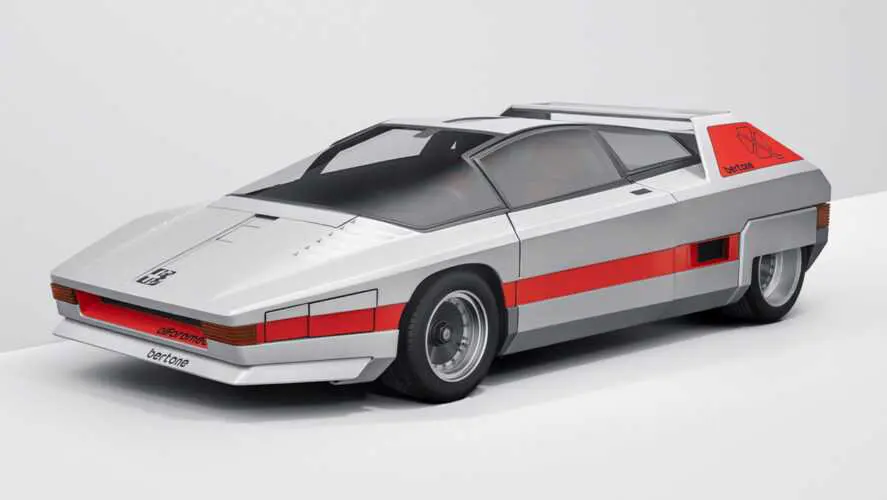
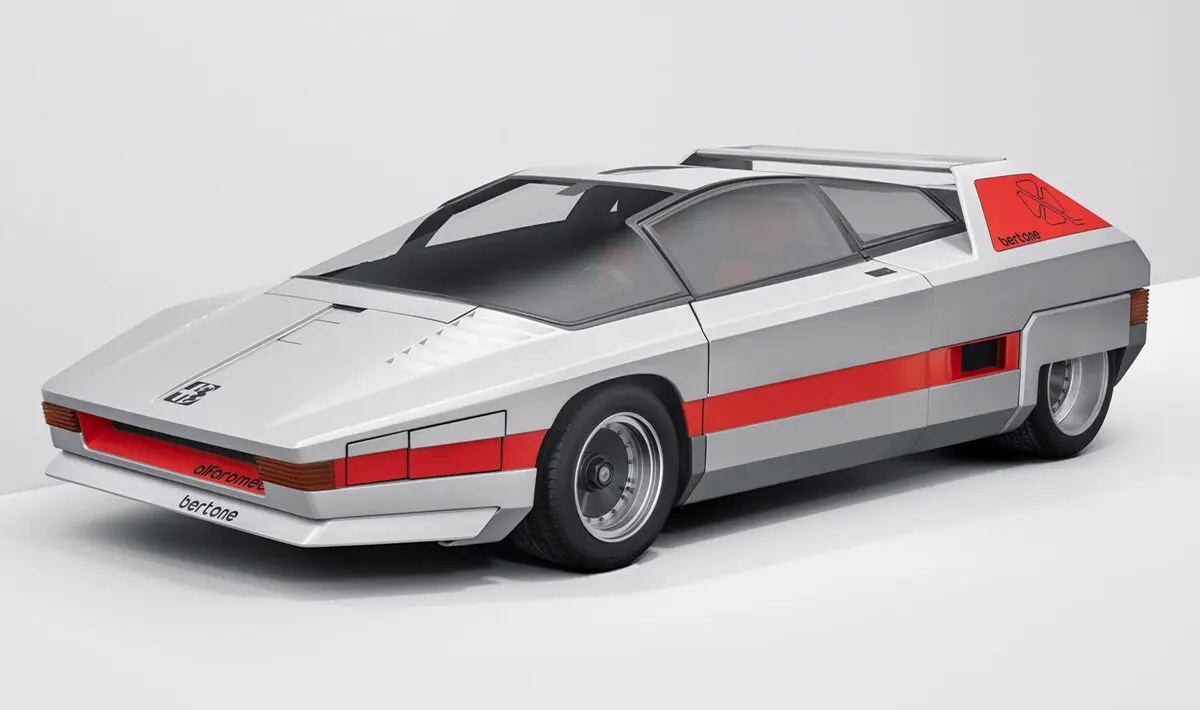
Alfa Romeo Navajo
If you’re looking for weird supercars, you need look no further than Alfa Romeo. Take their 1976 Navajo concept, it had every odd ingredient necessary: sci-fi rule-drawn Bertone exterior styling, racer underpinnings, a space-age interior. They constructed it as the last prototype based on the desirable 33 Stradale sports racer, and it deviates the most from that car’s curvaceous splendour. It’s so unique, with an unusual semi-shooting-brake body and a seemingly F40-style wing, that you’re not likely to miss it. This is a “high-tech” motor with active aero at both ends of the car, with the pop-out lights coming out sideways from the wings. It’s undeniably an automobile with the pulsating V8 heartbeat of a Le Mans racer.
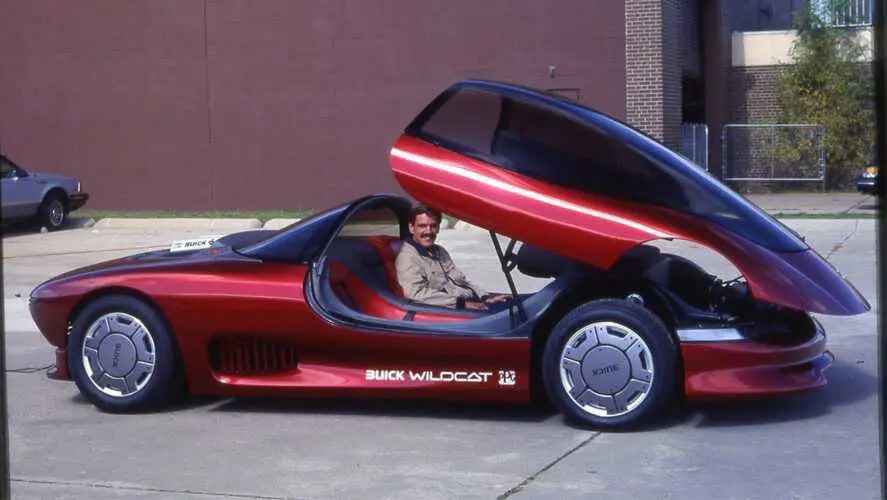
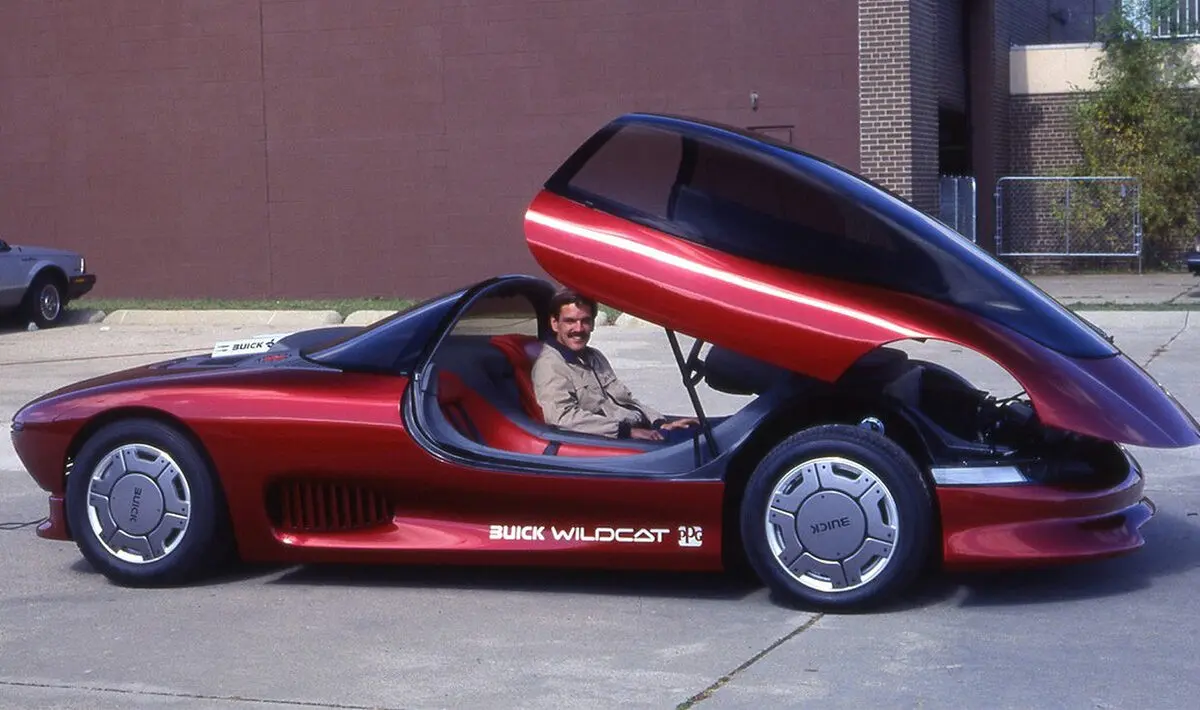
Buick Wildcat
In comparison, the Buick introduced the Wildcat nearly a decade later in 1985, positioning it at the other end of the peculiarity scale. It featured one of the biggest single moving pieces on a car; a bubble-like canopy that, instead of proper doors, tilted up alongside a huge piece of the body to reveal the cabin. It had a full carbon fibre body, which made the high-tech Wildcat surprisingly light, weighing just 1,320kg. This was despite the fact that it was fashioning an infotainment system, bold digital display, a leather-clad cabin, and a spokeless steering wheel. The Wildcat’s purpose was to be a vessel for Buick’s new ultra-performance 3.8-litre V6 engine, which protruded Bugatti Veyron-style from the centre of the car.
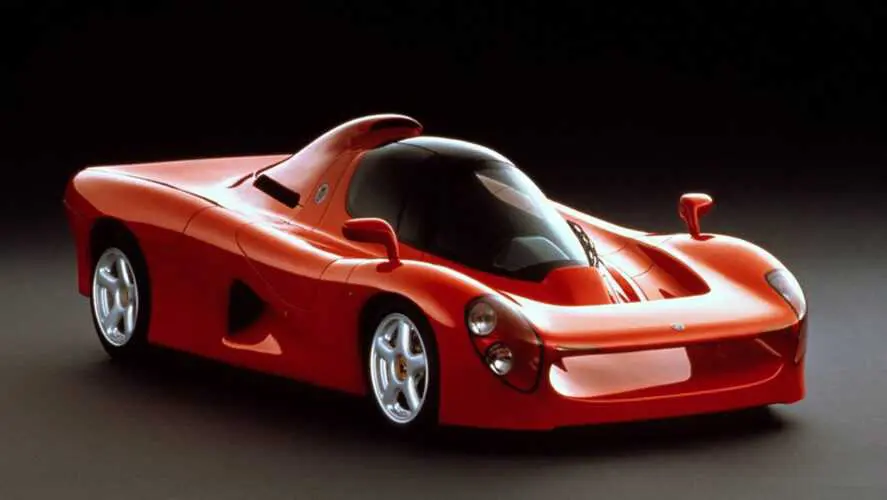
Yamaha OX99-11
The concept of an F1 car for the road came well before the Aston Martin Valkyrie, Mercedes Project One or Ferrari F50. Yamaha first had a go at it in the early 90s, developing its F1 V12 engine and using an F1 chassis. With a design similar to the current Czinger 21C, it delivered 400PS (300kW) output and 10,000rpm redline, making the OX99-11 V12 near-enough the road-ready F1 car. Its appearance is a bit bizarre, but it was ready for production until development disagreements and the Japanese recession limited completion to only three prototypes
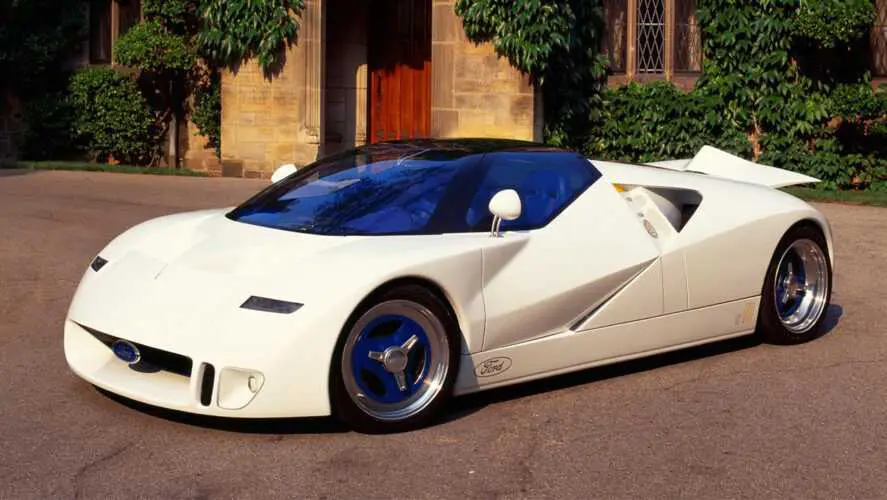
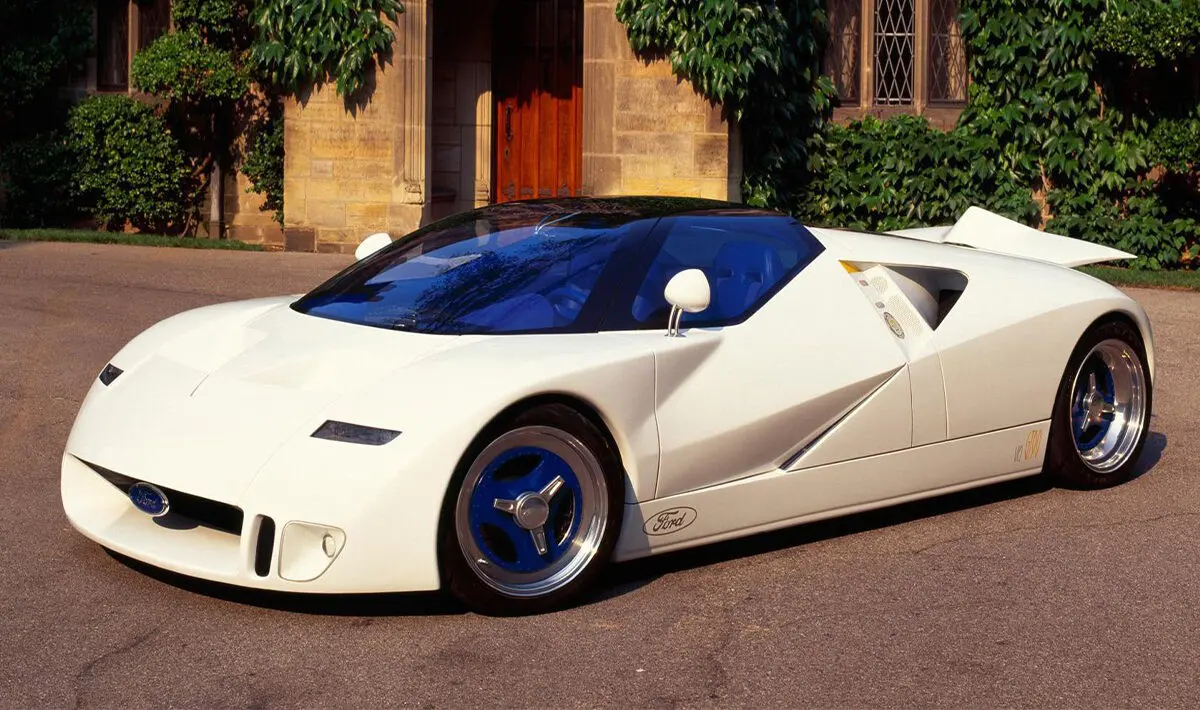
Ford GT90
Many car enthusiasts find this one shudder-worthy but it does the business for me. Why? Because the Ford GT90 does what it says on the tin; it reinterprets the legendary Ford GT racing car for the future-looking 90s. They pulled out all the stops underneath the triangular skin, with a beastial 730PS (537kW) 5.9-litre twin-turbo V12, based on the modular V8 architecture.Remarkably, the GT90’s exhaust became so hot that it featured space shuttle-esque heat tiles to prevent the bodywork from melting. Despite this, the GT90 was genuinely ready for production; however, it served primarily as a canvas for Ford’s upcoming ‘New Edge’ design direction, built on a Jaguar XJ220 chassis. In reality, New Edge was much more successful in practice on the Mondeo and Focus than on this outlandish concept.
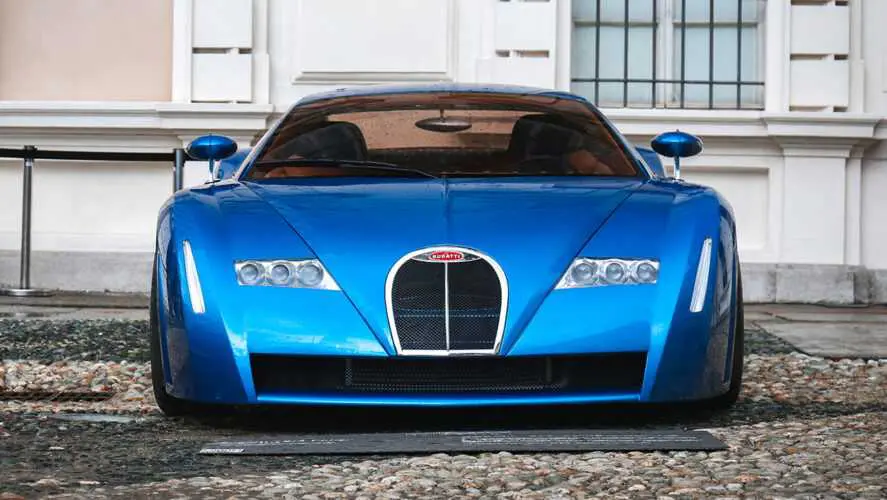
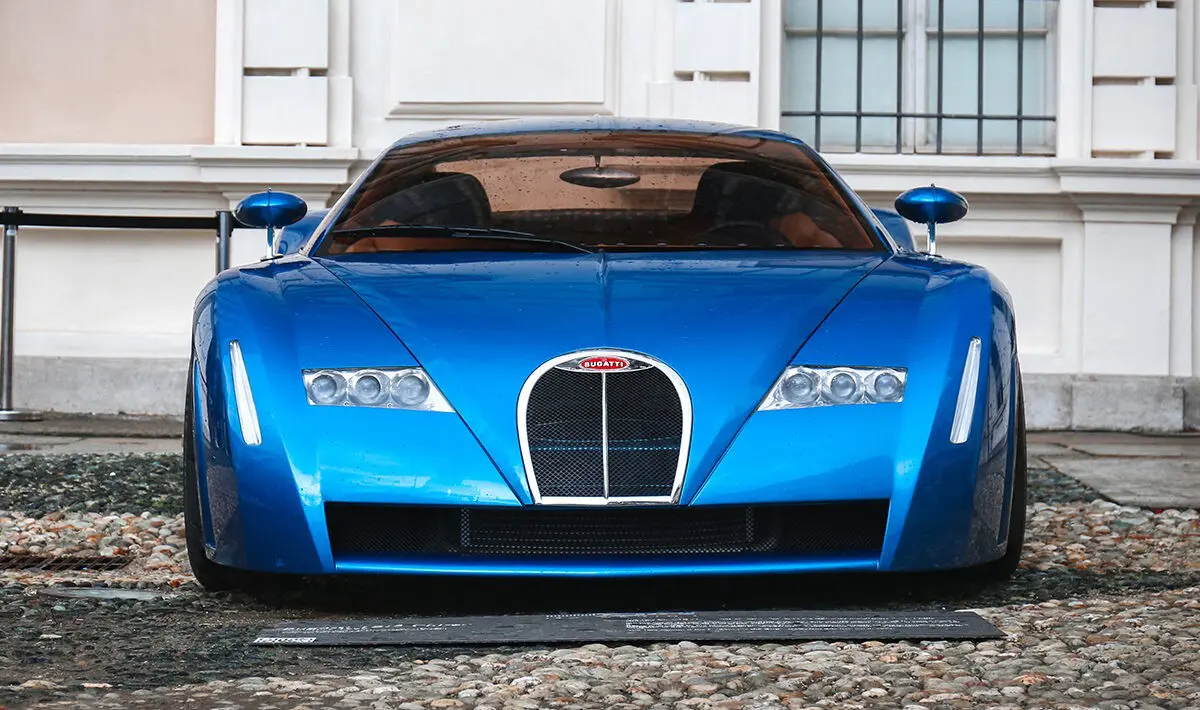
Bugatti Chiron Concept
Today’s Bugatti Chiron is unquestionably one of the most divine and beautiful hypercars on the market. They can’t say the same for the concept car that had the same name from 1999. It belonged to Bugatti’s Volkswagen-era, but despite Giugiaro’s involvement, it was clear that several styling kinks needed ironing out. Similarly to the Bentley and Audis mentioned before, the Chiron was interesting as a technical demonstration, even if the car itself wasn’t up to much.
It used a Diablo chassis and an all-wheel-drive system, but the Chiron was truly about one thing only: its ludicrous engine. Arranged in the familiar W formation, it displaced 6.3 litres and packed an unreal 18 cylinders in its glassed-in rear compartment. This came before they adopted quad turbocharging for the Veyron project and because of this, it only produced 563PS (414kW). This was nowhere near enough for Piech’s vanity project. Even so, the Chiron laid the foundations for the Veyron and the Chiron that exist today.
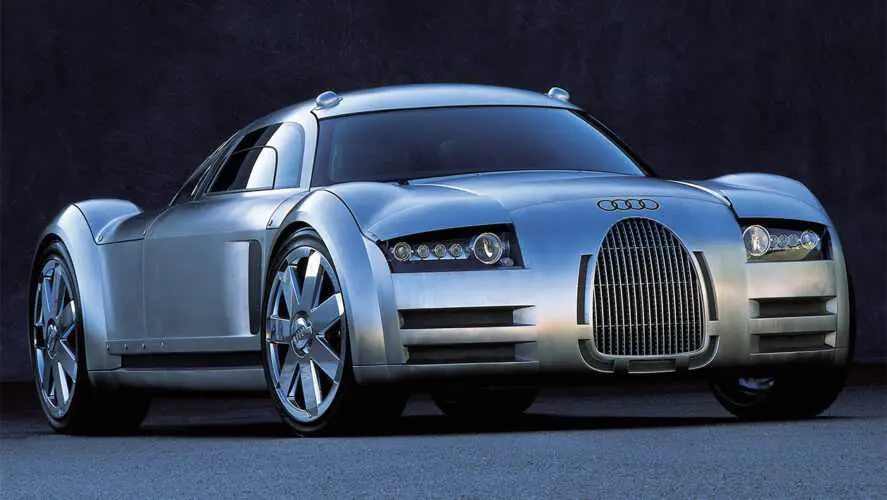
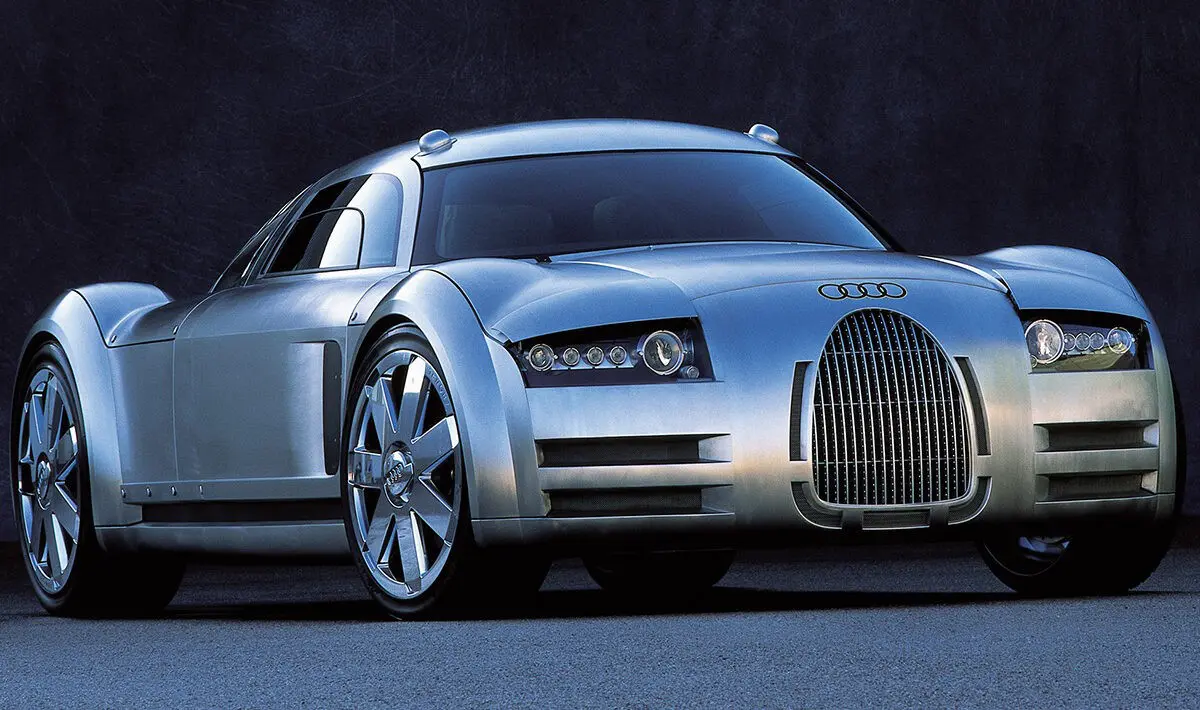
Audi Rosemeyer
The Audi Rosemeyer is proof that giving a nod to the historics should remain just that, a nod. A stainless-steel mash-up between the Auto Union silver arrows of the 1930s and the then-new Audi TT, the Rosemeyer loaded an 8.0-litre W16 engine in loving tribute to those 16-cylinder ‘30s racers, which were driven by namesake Bernd Rosemeyer. The Rosemeyer was mighty but not as powerful as one might expect, as it didn’t use turbochargers, delivering just 710PS (522kW), though in theory it still had a max speed of 217mph. That engine and some of these design cues made it to production, though heavily refined and ultimately where they belong, in a Bugatti.
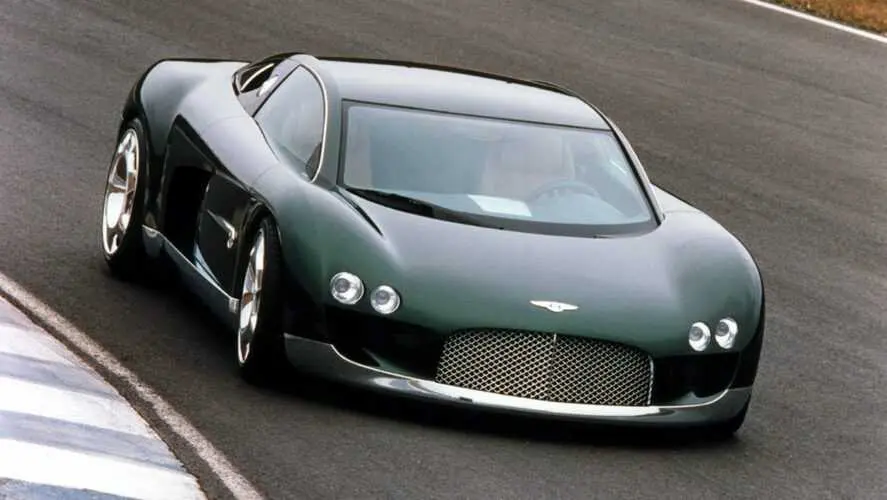
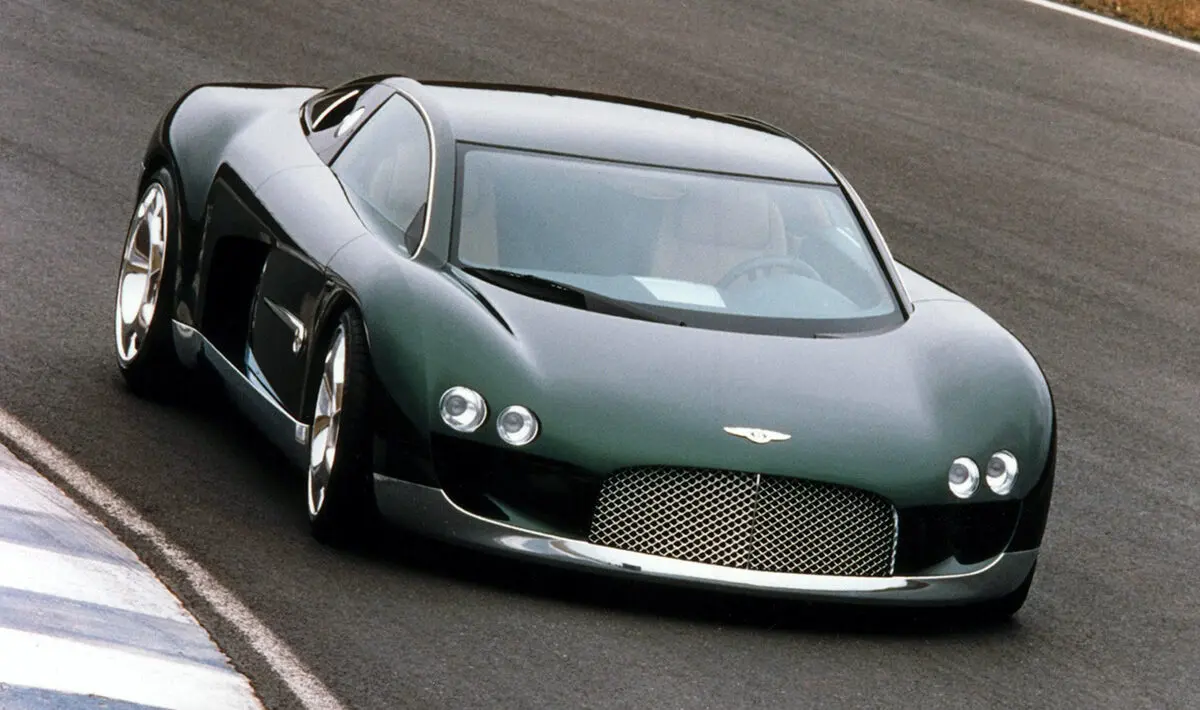
Bentley Hunaudières
If you’ve ever imagined what a Bentley hypercar would look like, you’re in luck. In 1999 they were on the verge of producing a car in the shape of the Veyron. Hunaudières was the name of this concept, inspired by the famous straight at Le Mans (the place of some Birkin-driven Blower Bentley heroics). Hunaudières used the same engine and underpinning of the Audi Rosemeyer, produced 632PS (465kW), and could top 217mph utilising a five-speed manual gearbox. But let’s be frank, it’s not really a Bentley, is it? With its wide-mouth, bug-eyed exterior and odd light-filled rear end, this was a motor moons away from the high-performance brand Bentley is today, let alone what it was in ’99.
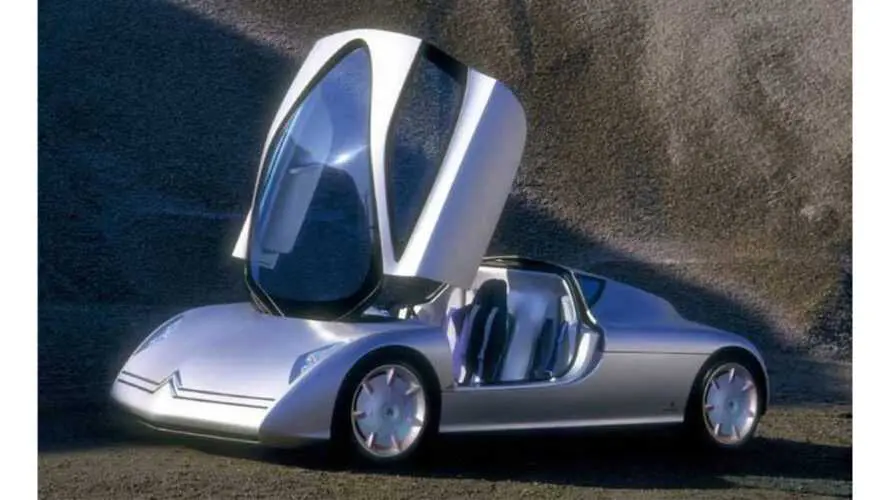
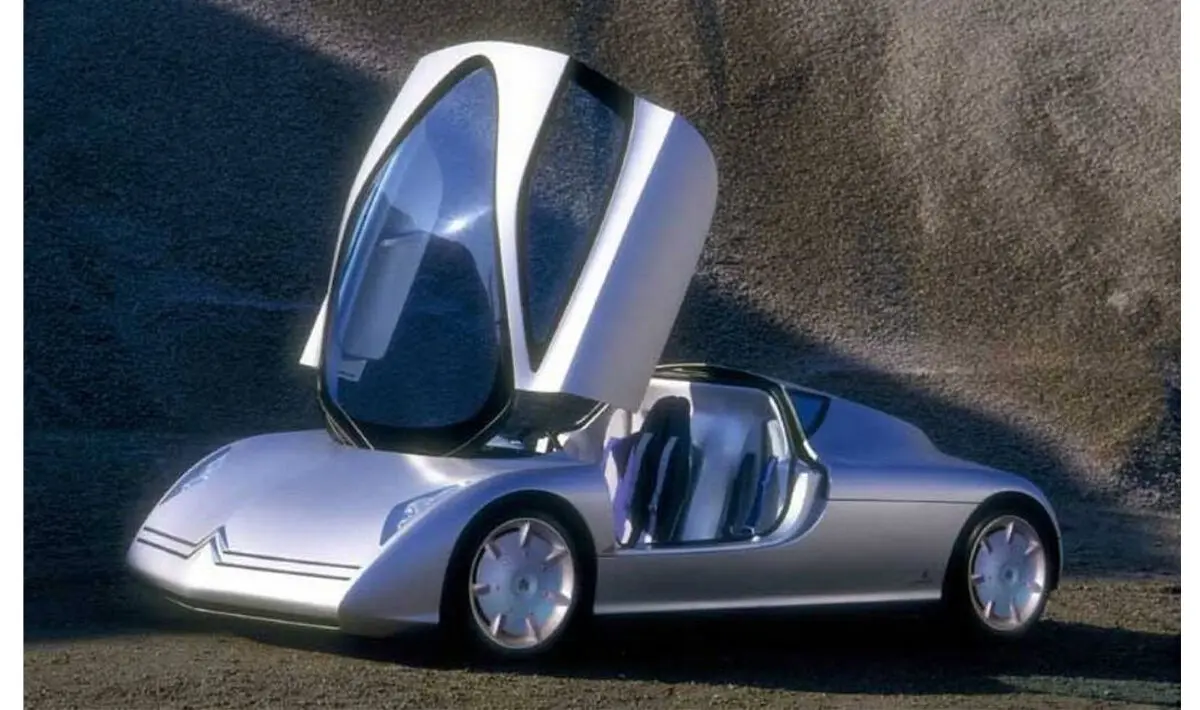
Citroën Osée
It’s now time to be bemused by the abjectly bizarre realms of French supercar concepts from the noughties, beginning with the Citroën Osée. Similar to the Buick Wildcat, it features a ginormous fighter-style canopy opening, which was designed by Pininfarina. Its engine is lame when compared to the other powerful cars on this list, offering a production-spec 3.0-litre V6, that produced just 202PS (149kW). A five-speed automatic transmission was on hand to get the wheels in motion. The same engine was in a Citroën Xantia Activa at the time, whose remarkably neat hydraulic Activa suspension was also borrowed by the Osée. The designers inventively used an LCD screen to replace the rear-view mirror due to visibility issues caused by the louvred rear deck. Ahead of its time perhaps, but it’s still an odd car.

Peugeot 907 V12
This mad machine was formed in the mind of Gerard Welter, fabled Peugeot designer and Le Mans record chaser. He seemingly answered the question nobody asked, “what if Peugeot made a car to rival the McLaren–Mercedes SLR?”. It was never intended for production, it was instead a design exercise at a new dawn for Peugeot; to celebrate the opening of its new design house in Velizy. The Peugeot 907 V12 looks similar in silhouette to the SLR, with some of the details bearing a striking resemblance. That bulging bonnet, the gills above the side exhausts, the swooping windscreen, even the elongated mirrors.
Speculators spread online that this one-off used the same carbon monocoque as the SLR, but they never confirmed that rumour. However, they confirmed that they definitely didn’t share an engine. As its name suggests, it has a 500PS (367kW) V12, born from marrying two of Peugeot’s 3.0-litre V6s together. The weirdest part of it all? It was a fully running prototype.
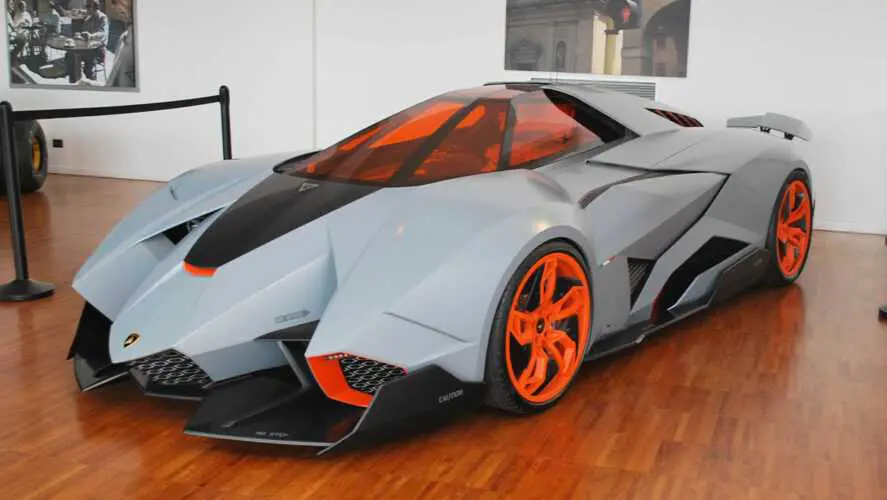
Lamborghini Egoista
This change in spectacle may be alarming, going from quite a splendid Peugeot to a truly hideous Egoista. True, Lamborghini are all about luscious design and excess, an ever-present balance of luxury and beauty. However, beauty isn’t a word on anyone’s lips while looking at this car. More likely is imagining a Gallardo that’s been crashed twice. Or a failed genetic experiment between a Sesto Elemento and an F117 Nighthawk. Whatever it is, it’s not a pretty sight. To explain the logic behind its design, the creators shaped the Egoista to resemble a bull ready to charge, while its name means ‘Selfish’ in several languages. How They used this monstrosity in any way to celebrate five decades of Lamborghini, I’ll never understand.

Dodge Tomahawk
Here we go, this is much more up my street, regardless of whether it’s virtual or not. This list is all about the weird and (not) wonderful cars, and they don’t get much weirder than some of the motors in the Vision Gran Turismo series. The Dodge Tomahawk checks both the weird and cool boxes. If you were to ask the question “what would a car that has ALL the active aero look like?”. This car would be the answer. It sports massive flaps over the wheel arches, and a huge double-wing which give the impression the Tomahawk’s skin is alive. Its motored by a near-flat 144-degree 7.0-litre V10 engine, producing over 1,000PS (735kW), with all four wheels getting that power via a variable-fin quad-stage pneumatic power unit. So is the V10 effectively a generator? No idea. What I do know is it’s Gran Turismo and it looks cool.
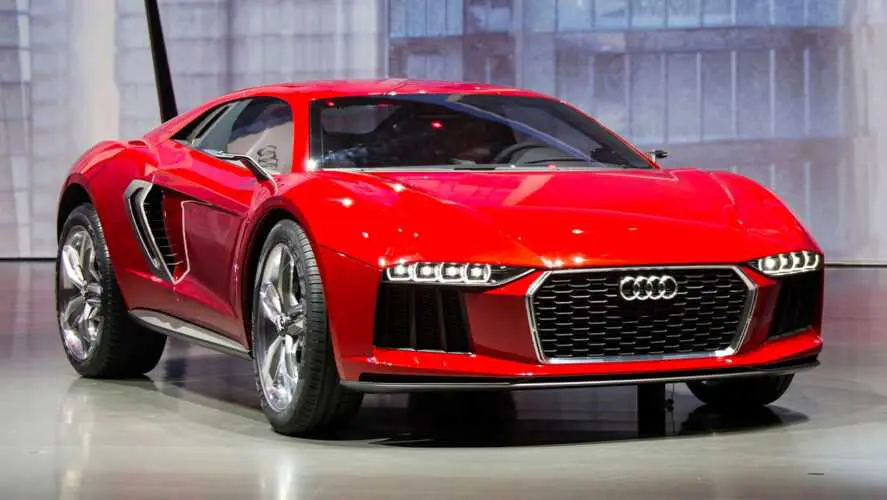
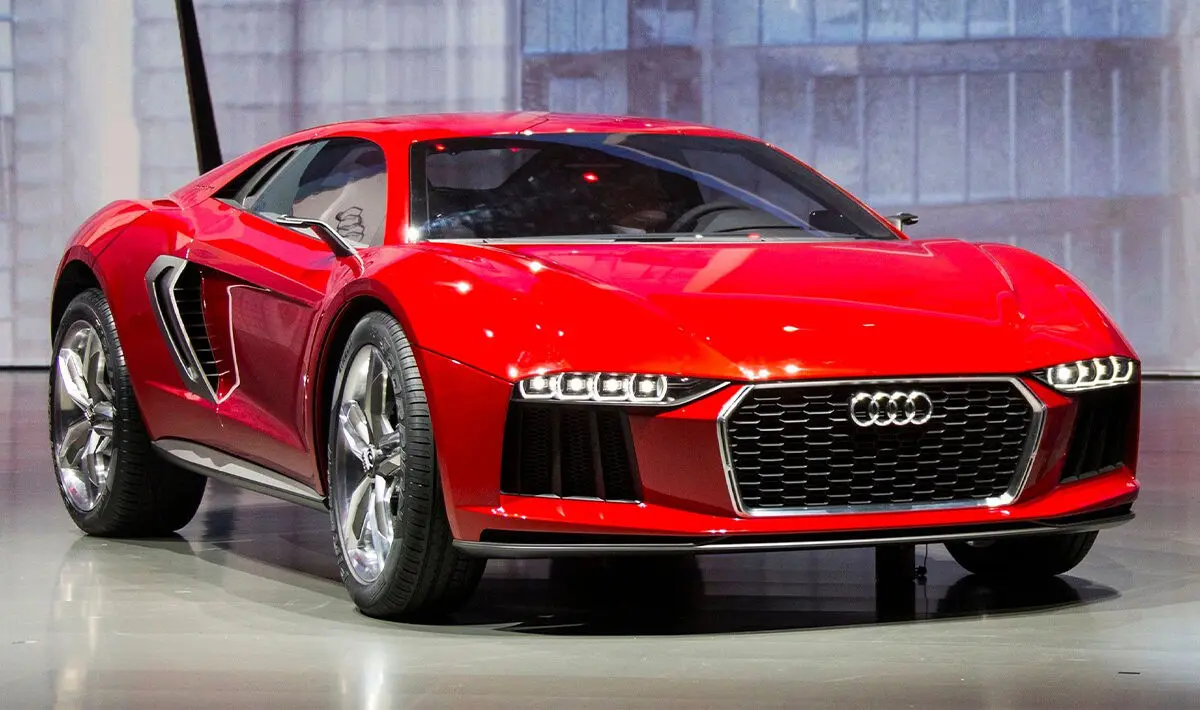
Audi Nanuk
Audi takes the crown for the king of the weird supercar concepts if the Nanuk is anything to go by. It’s a concept that previewed the incoming second-generation R8 but took a left turn down a confusing, less-trodden path. Yes, it features serious sidewalls because it’s an off-road supercar, reminding us of the Mega Track. It’s a pre-dieselgate concept because the Nanuk’s engine comes with the legendary V10 turbo diesel engine from the Group’s stable, packing a healthy 543PS (400kW). At the time, some anticipated that it might enter production, but we weren’t convinced it would ever happen. However, other VW group members have since been tempted to create an off-road sports car. As I write, Porsche is preparing a 911, production safari-spec 992, and Lamborghini has already built its off-road Huracan concept. A fine legacy the weirdest of weird Nanuk can call its own.


Read more on

MyCarHeaven are on Instagram. Go check us out and do follow us.
Go visit the MyCarHeaven Instagram page. We post regular quality content, predominantly focused on classic cars, supercars, hypercars and car shows. We also feature all our competitions here, where you will have the chance IF YOU FOLLOW US and you follow the competition entry criteria, you could be in with a chance of winning tickets to the best UK car shows, and other automotive stuff.
Go to the MyCarHeaven Instagram account here.Related Stories
Advertisement Advertisement
 Advertisement
 Advertisement
 Advertisement